If You Have A Medical Condition, Read A Book
Sudheera Satyanarayana
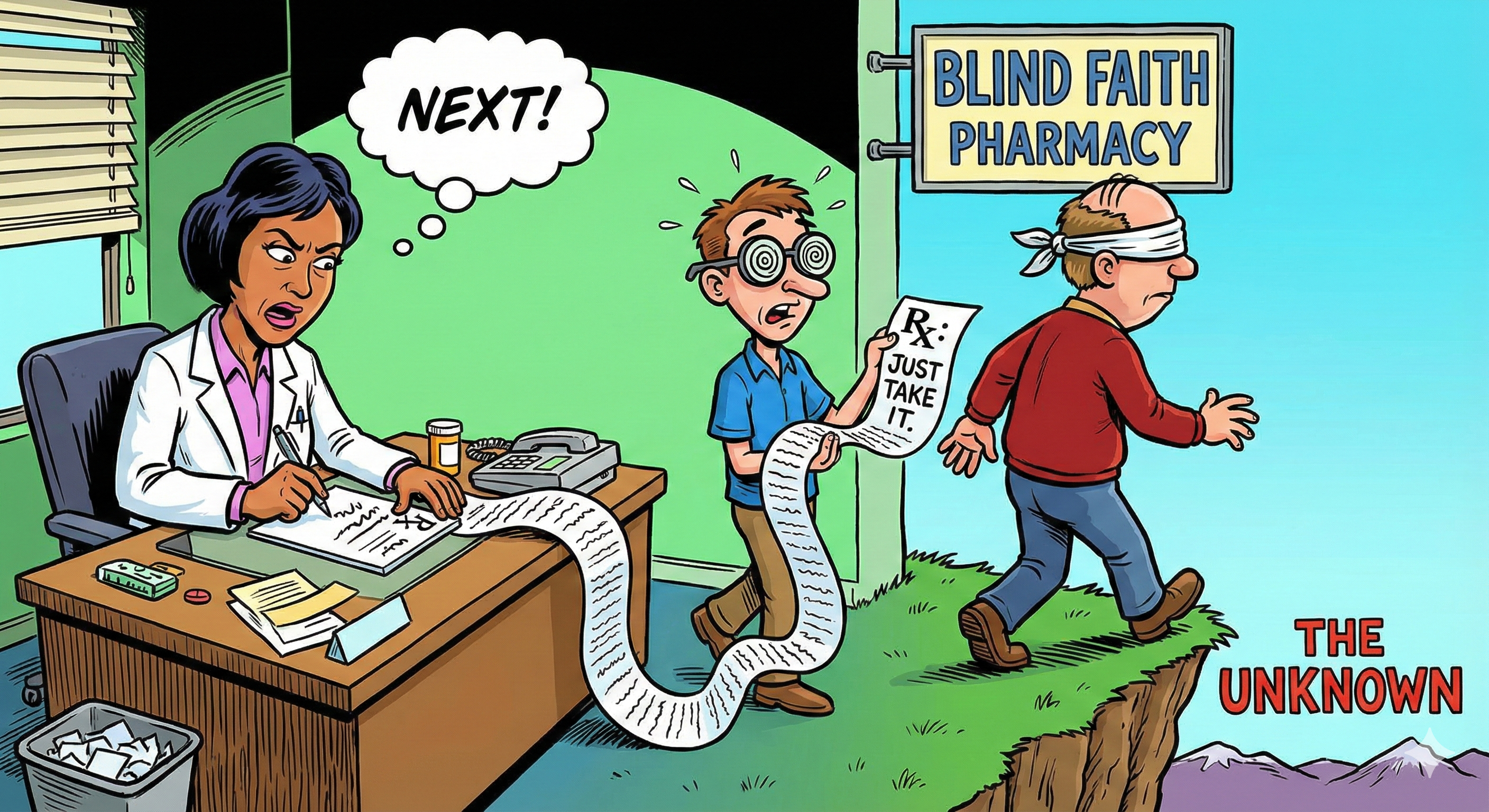
In matters of health, passivity is the enemy. If you are facing a medical condition, whether it is obesity, diabetes, or something more critical you cannot afford to simply outsource your understanding of your own body. You must become an informed patient. Read the definitive books on your specific condition, watch the lectures, and understand the mechanisms at play. This self-education is the foundation of true agency; it allows you to filter out noise, tailor a lifestyle and whole-food diet that actually works for you, and move beyond generic advice. Most importantly, it changes the dynamic in the exam room: you will no longer just be receiving instructions, but asking the right questions and possessing the discernment to choose a doctor who is truly the right partner for your journey.
Phase 2: Curating Your Information Diet
Don’t just Google your symptoms; build a curriculum. You are essentially giving yourself a crash course in your specific physiology.
Books And Audiobooks
Start with the bestsellers written by reputable clinicians or researchers, but don’t stop there. Look for books that cite their sources extensively. Audiobooks are excellent for immersion. Listen to them during your commute or workouts to get familiar with the vocabulary and broad concepts.
YouTube As A Lecture Hall
Avoid 10-minute “influencer” videos designed for clicks. Instead, search for “Grand Rounds,” “medical conference lectures,” or “university lectures” regarding your condition. You want to watch the presentations doctors give to other doctors. These are often available for free and contain the nuance that popular media strips away.

Phase 3: Leveraging AI As Your Private Tutor
Artificial Intelligence is the most powerful tool for the modern patient, provided you treat it as a research assistant, not a doctor. Use it to bridge the gap between layman’s terms and medical terminology.
Simplify Complex Mechanisms
If you don’t understand how a specific hormone works, ask an AI: “Explain the mechanism of action of [Drug/Hormone] in simple terms. Use analogies.”
Cross-Reference Advice: If you read conflicting advice, paste both viewpoints into an AI and ask: “What are the physiological arguments for and against these two approaches? Where do they disagree?”
Check Interactions: Use it to scan for potential issues you can bring up with your specialist. “I am taking Supplement X. Are there known contraindications with Protocol Y?”
Use AI To Better Understand The Books You Are Reading
If you did not understand a term or the concept explained in the book, seek clarity with an AI system. Treat the AI as your friendly professor and ask it to break down the material in the book. In a way, it is like talking to a co-reader of the book. Verify what the AI says using authentic sources.
Phase 4: Go To The Source, Read The Research
Eventually, you must graduate from books to the primary literature. News articles often distort scientific findings to create headlines. To know the truth, you have to look at the actual papers on PubMed or Google Scholar.
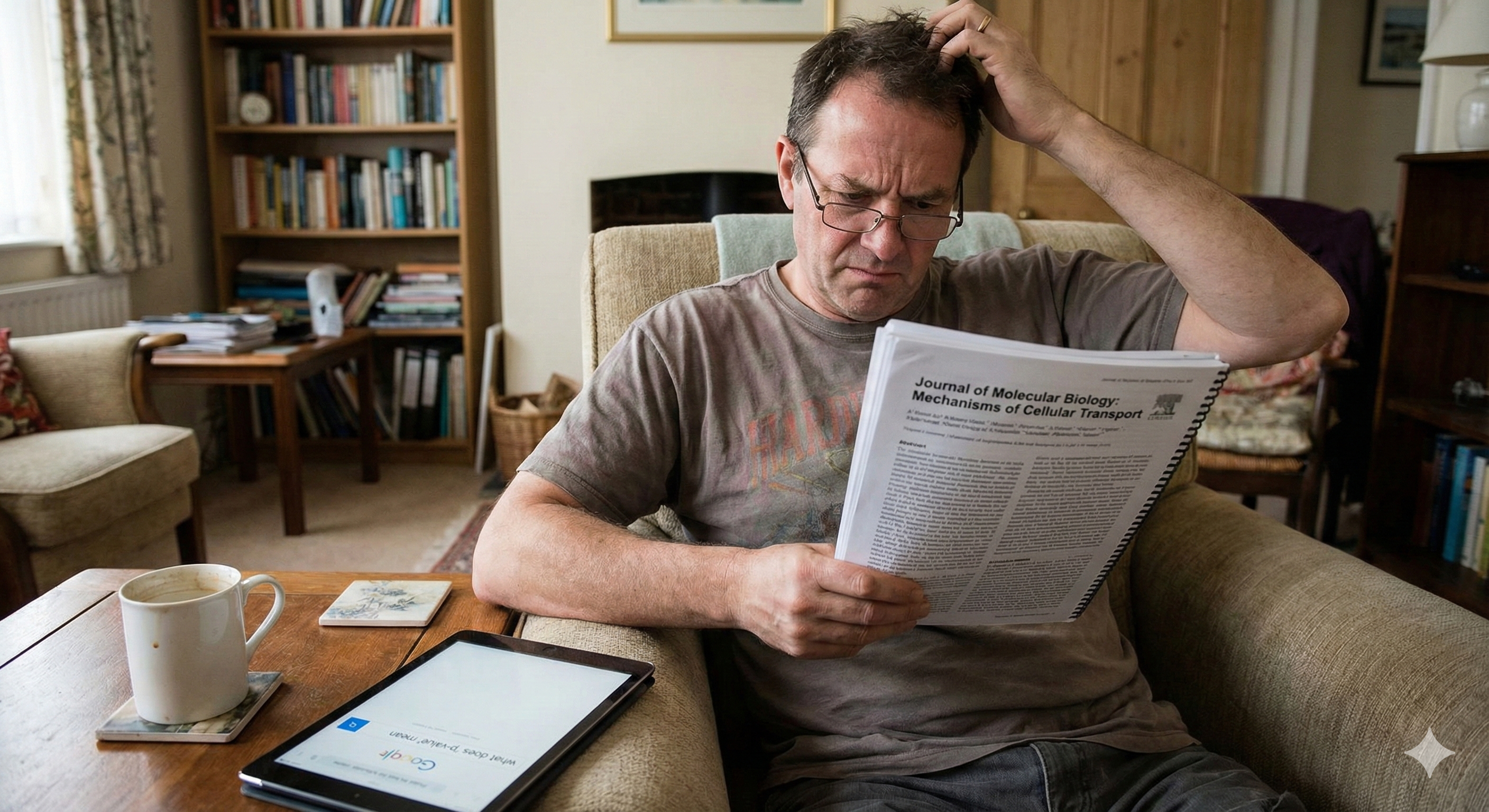
You don’t need a PhD to grasp the essentials. Don’t be intimidated by the jargon. Use your AI tool to define terms you don’t know. Focus on the Methods and Results sections. Did the study use humans or mice? Was the sample size 10 people or 10,000? Was it an observational survey or a randomized controlled trial? Reading the “actual report” rather than a summary ensures you aren’t building your health strategy on someone else’s interpretation.
The Preemptive Strike: Why The Healthy Must Study Disease
If you are currently healthy, you have the greatest advantage of all: time. But do not mistake the absence of symptoms for the absence of risk. You shouldn’t wait for a diagnosis to become a student of physiology. You study finance not because you are bankrupt, but to prevent bankruptcy. Health requires the same rigorous due diligence.
We are living through silent epidemics such as metabolic syndrome, insulin resistance, cardiovascular decay—that simmer for decades before boiling over. By the time a “condition” is named, the damage is often deep. If you read about the mechanics of type 2 diabetes or hypertension now, you will see the warning signs in your own life years in advance. You will understand why you need to prioritize sleep, why you must choose natural whole foods over processed convenience, and why that walk after dinner matters biologically.
Lifestyle Design Through Knowledge
When you understand the mechanism of disease, “lifestyle changes” stop being chores and start being logical decisions.
Diet
You won’t just “eat clean” because a magazine told you to; you will avoid sugar and seed oils because you understand exactly how they drive inflammation and mitochondrial dysfunction.
Movement
You won’t just exercise to “look good”; you will lift weights and ruck because you know muscle is your metabolic currency and the primary organ of longevity.
Education transforms discipline into common sense. It inoculates you against fads and allows you to build a protocol that keeps you resilient against both chronic diseases and the next viral epidemic.
The Guardian Of Your Tribe
Finally, becoming an informed individual is an act of love. Your family and friends may not have the time or inclination to dig through medical literature, but they will rely on you when the crisis hits.
By educating yourself now, you become the Chief Health Officer of your household. You will be the one who notices that a parent’s fatigue isn’t just “old age” but perhaps a nutritional deficiency or a medication side effect. You will be the one who steers your children away from the marketing of “healthy” sugar-laden snacks toward real nourishment. When a loved one falls ill, your knowledge will be the shield that protects them from panic and poor advice.
Don’t study disease to worry about it. Study it to defeat it.